The Most Important Healthcare AI Innovations Aren't Always the Most Exciting
This weekend, we hosted the Venture Forum at the Global Health Forum Congress.
Over 300 companies applied, and the ones that took the stage were exciting: RNA therapeutics, early cancer detection, and precision medicine... all sexy subjects that overfill a room.
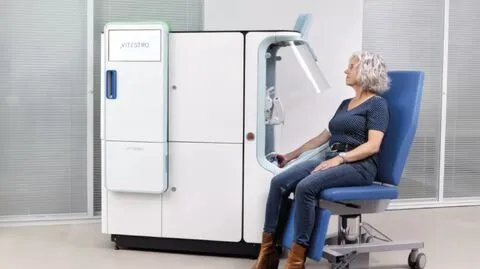
This morning, reflecting on these advances, I also kept thinking about the less sexy solutions, like a robot that draws blood.
In August, the FDA authorized Aletta, the first device cleared to draw blood on its own. Nothing about it is sexy. It finds a vein, inserts the needle, swaps tubes, and applies a bandage. A phlebotomist starts each session, checks every tube, and steps in when something goes wrong. One phlebotomist can supervise up to three devices.
That ratio is the whole story. There’s a shortage of trained phlebotomists, and patients are waiting longer for one of the most routine procedures in medicine. Aletta doesn’t reinvent anything. It removes a bottleneck.
And patients seem ready for it. In the clinical study, nearly half said they’d rather have the robot do it, which tells you the stick was never where the human value lived. Human value lives in the moments surrounding: noticing the patient about to faint, calming someone with a history of bad draws, deciding when to stop and try another way.
So the job changes. Fewer people placing needles, more people supervising and reading the room across three chairs at once. That works if we train clinicians for the person, not just the procedure.
The ventures that move the needle in global health won’t always be the ones that dazzle a room, and I am here cheering for them just as much.

Comments
Be the first to comment.