AI Literacy Is the New Economic Competency
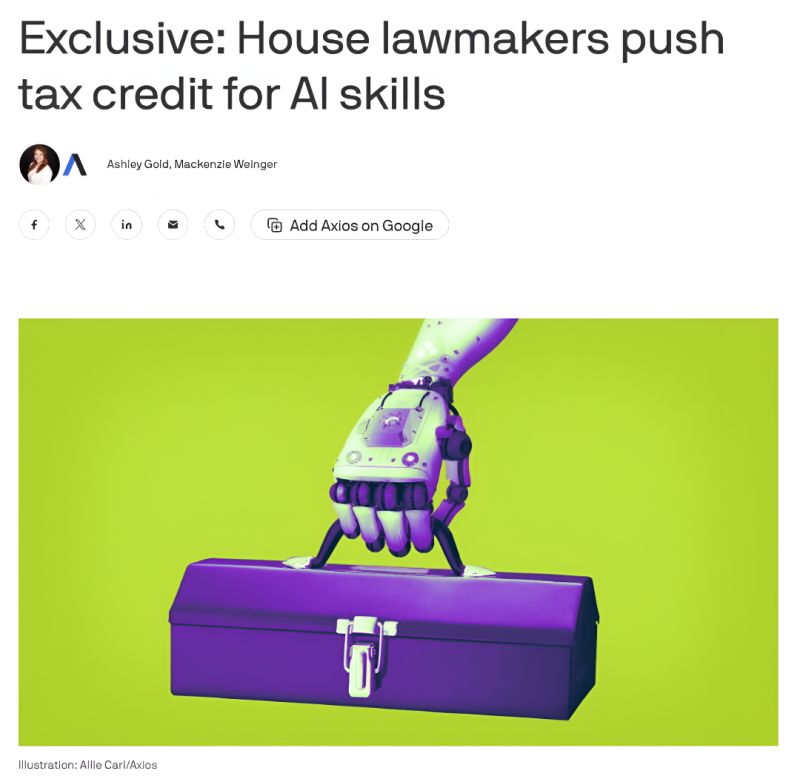
Last week, U.S. lawmakers introduced a bipartisan proposal to offer tax credits to companies that invest in AI upskilling for their employees.
That caught my attention because incentives shape behavior.
We often talk about AI disruption as inevitable. But the real question is whether people will be prepared to adjust to an AI-reshaped work environment.
A tax credit for AI training signals something important: workforce adaptation is an economic policy.
But here’s what I’m thinking about: Who gets access to that training?
Is it reserved for technical teams and senior leaders? Or does it extend to caregivers returning to work, mid-career women pivoting industries, small operators trying to stay competitive?
AI literacy is quickly becoming a baseline economic competency. That means real fluency – understanding how systems think, where they fail, and how to direct them responsibly.
If we’re going to subsidize AI adoption, we should measure success by how many humans gain agency.
Policy can accelerate innovation, but it can also widen gaps if we’re not intentional.
Find the link to the full article here.

Comments
Be the first to comment.